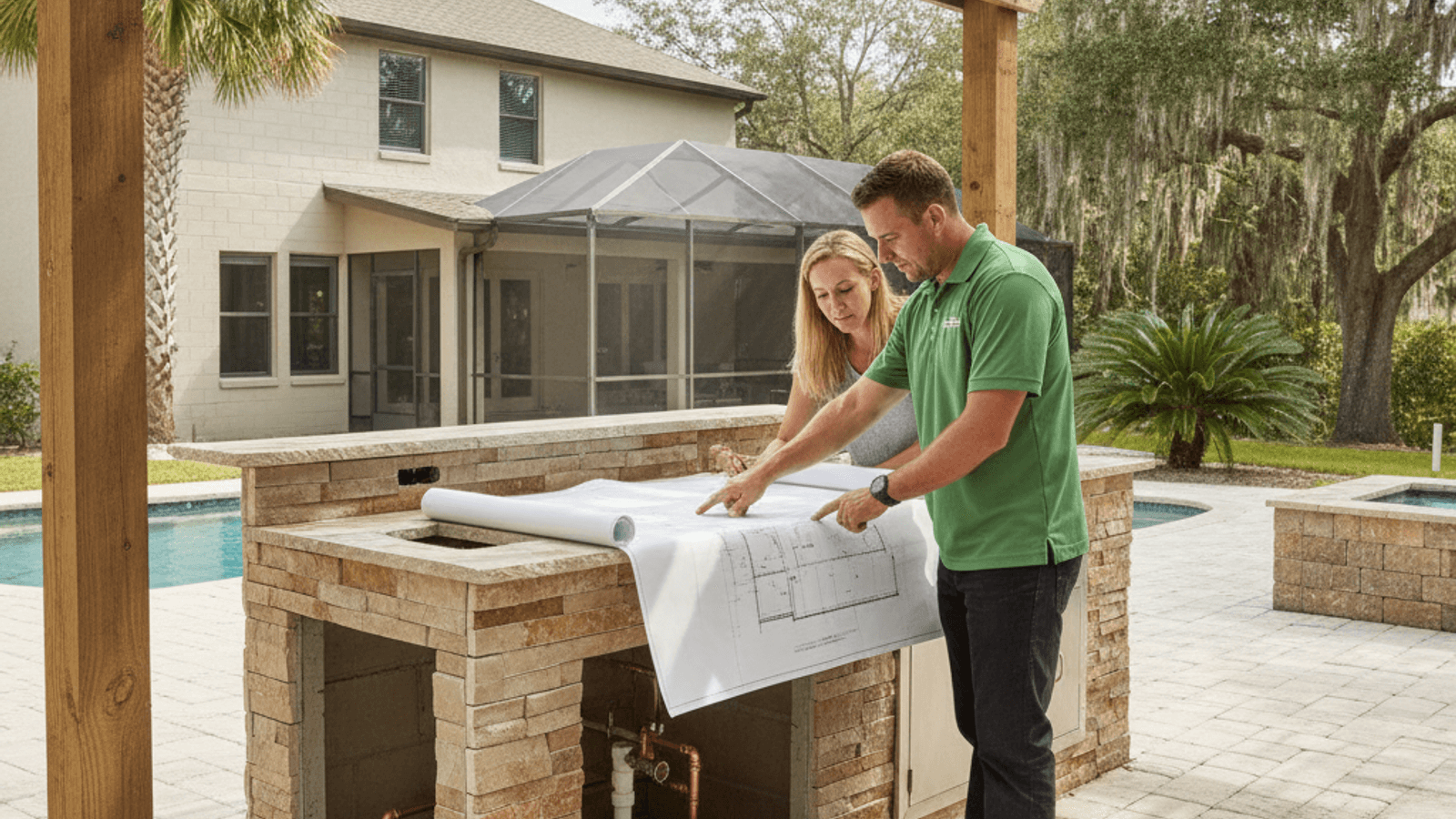
An outdoor kitchen sounds like a straightforward project until you start planning one, and then it becomes clear it’s really three or four projects layered together: the structure itself, the utility work behind the walls, weather and humidity protection, and the appliances that actually go into it. Skipping the planning-stage thinking on any one of these is how an outdoor kitchen budget balloons partway through construction.
Start with utilities, not appliances
The most expensive surprises in an outdoor kitchen project usually trace back to utility work that wasn’t planned for at the start. Running gas line to the kitchen location, whether for a built-in grill or a full range, adding a dedicated electrical circuit for outdoor-rated outlets and any refrigeration or lighting, and in some cases running water line for a sink, all need to happen before the structure goes up, not after. Retrofitting utilities into a finished outdoor kitchen structure is dramatically more expensive and disruptive than running them during initial construction.
This is why the planning conversation should start with what appliances and features you actually want, grill, side burner, pizza oven, refrigerator, sink, before a single stone is set, since that list determines exactly what utility work needs to happen and where.
Why a covered structure changes everything
Central Florida’s combination of intense sun, near-daily summer storms, and year-round humidity makes an uncovered outdoor kitchen a genuinely different experience than a covered one. An uncovered kitchen means appliances sit exposed to direct sun and rain, accelerating wear on stainless surfaces and electronics, while a covered structure, whether a pergola, gazebo, or solid roof extension, protects the whole space and makes it usable during a rain shower rather than shutting the kitchen down the moment weather rolls in.
Budgeting for that covered structure as part of the outdoor kitchen project from the start, rather than treating it as a nice-to-have add-on later, is one of the most common places homeowners underestimate the real cost of a fully functional Central Florida outdoor kitchen.
Humidity protection for appliances is not optional here
Year-round humidity is the defining maintenance challenge for outdoor kitchen appliances in Central Florida, more than heat and more than cold, since cold simply isn’t a factor here. Stainless steel appliances need consistent care, fitted covers between uses and regular cleaning with a marine-grade product rather than an abrasive pad, to avoid rust developing at hinges, knobs, and fasteners over time. Appliances rated specifically for outdoor, coastal, or high-humidity use hold up better long-term than indoor-rated appliances repurposed for an outdoor kitchen, even though they cost more upfront.
Planning for this at the appliance-selection stage, rather than discovering it after the first appliance starts rusting, is a genuine budget consideration worth building in from day one.
Fire pits and fireplaces as part of the same project
Many outdoor kitchen projects include a fire pit or outdoor fireplace as a companion feature, either gas or wood-burning, positioned for a separate seating area near the kitchen. Gas fire features tie into the same gas line planning as a built-in grill, so if both are part of the plan, coordinating that utility work together during the initial planning stage is more efficient and often less expensive than running gas line in two separate phases.
Fire pits and fireplaces also come with real clearance and code requirements from the home and any structure above them, which a contractor familiar with local permitting will build into the design rather than something you should have to figure out after the fact.
Material choices for counters and cabinetry
Outdoor kitchen counters and cabinetry face the same humidity and sun exposure as everything else in a Central Florida backyard, which rules out a lot of indoor kitchen materials by default. Natural stone, concrete, and tile counters hold up well to sun and moisture, while indoor-grade laminate or wood cabinetry breaks down quickly outdoors here. Marine-grade polymer cabinetry and stainless steel cabinet boxes are the standard choice for outdoor kitchens in this climate specifically because they resist the moisture and humidity cycling that would warp or rot an indoor-rated material within a season or two.
Choosing materials rated for genuine outdoor and humid-climate use from the start, rather than trying to save money with an indoor material that looks similar, is one of the clearest places where cutting a corner at the planning stage turns into a full material replacement a couple of years later.
Sequencing the project in phases
Not every homeowner needs or wants to build the full outdoor kitchen vision in one project. A common and financially sensible approach is phasing: pour the counter structure, run all the utility rough-ins for gas, electrical, and water at once even if not every appliance is installed immediately, then add the refrigerator, sink, or pizza oven in a later phase once budget allows. The key is planning the utility rough-in for the full future vision even if the initial build only includes part of it, since that’s the expensive-to-retrofit piece. Adding an appliance to an already-roughed-in space later is straightforward. Adding utilities to a finished structure after the fact is not.
Realistic budget ranges
A full outdoor kitchen project in Central Florida typically runs $8,000 to $35,000 or more, depending on scope, appliance selection, and structural complexity. A basic grill island with a counter runs toward the lower end, while a full kitchen with a range, refrigeration, sink, extensive counter and storage space, and a covered structure runs toward the higher end and beyond. Fire pits alone typically run $1,500 to $4,500, while a full outdoor fireplace runs $6,000 to $18,000.
HOA and permitting considerations
Most Central Florida counties require permits for the structural, gas, and electrical work involved in an outdoor kitchen, and many HOAs, particularly in newer planned communities, require architectural review for any permanent structure visible from the street or neighboring properties. Confirming both requirements at the planning stage, before finalizing a design or ordering appliances, avoids the redesign delays that come from submitting plans that don’t meet either standard the first time.
Planning around how you’ll actually use it
An outdoor kitchen built primarily for weekend entertaining has different priorities than one meant for daily family cooking. Homeowners in communities like Winter Garden and Oviedo planning a kitchen for regular daily use often prioritize a functional prep counter and easy sight lines to a pool or play area, while an entertaining-focused kitchen leans more toward bar seating and a layout built around hosting a crowd. Working through actual use patterns before finalizing a layout keeps the finished kitchen matching how the family really lives, not just how it looks in a rendering.
How much does a full outdoor kitchen cost in Central Florida?
Most projects run $8,000 to $35,000 or more depending on scope, appliance selection, and structural complexity, with a basic grill island landing toward the lower end and a full kitchen with range, refrigeration, and covered structure toward the higher end.
Do I need a permit for an outdoor kitchen in Orlando?
Most Central Florida counties require permits for the structural, gas, and electrical work involved, and many HOAs require architectural review as well. Confirm both before finalizing your design.
Why does humidity matter more than heat for outdoor kitchen appliances here?
Central Florida’s year-round humidity drives rust and corrosion on stainless appliances more than heat does, since cold isn’t a factor in this climate at all. Covers, regular cleaning, and outdoor-rated appliances all help manage that ongoing exposure.
Should I build a covered structure with my outdoor kitchen?
Strongly consider it. A covered structure protects appliances from sun and rain and keeps the kitchen usable during Central Florida’s near-daily summer storms, which an uncovered kitchen simply can’t offer.
Planning an outdoor kitchen and want to budget it accurately from the start, utilities, structure, and appliances included? Call (407) 000-0000 and we’ll connect you with an experienced, insured local crew that plans the whole project together instead of piecing it out.