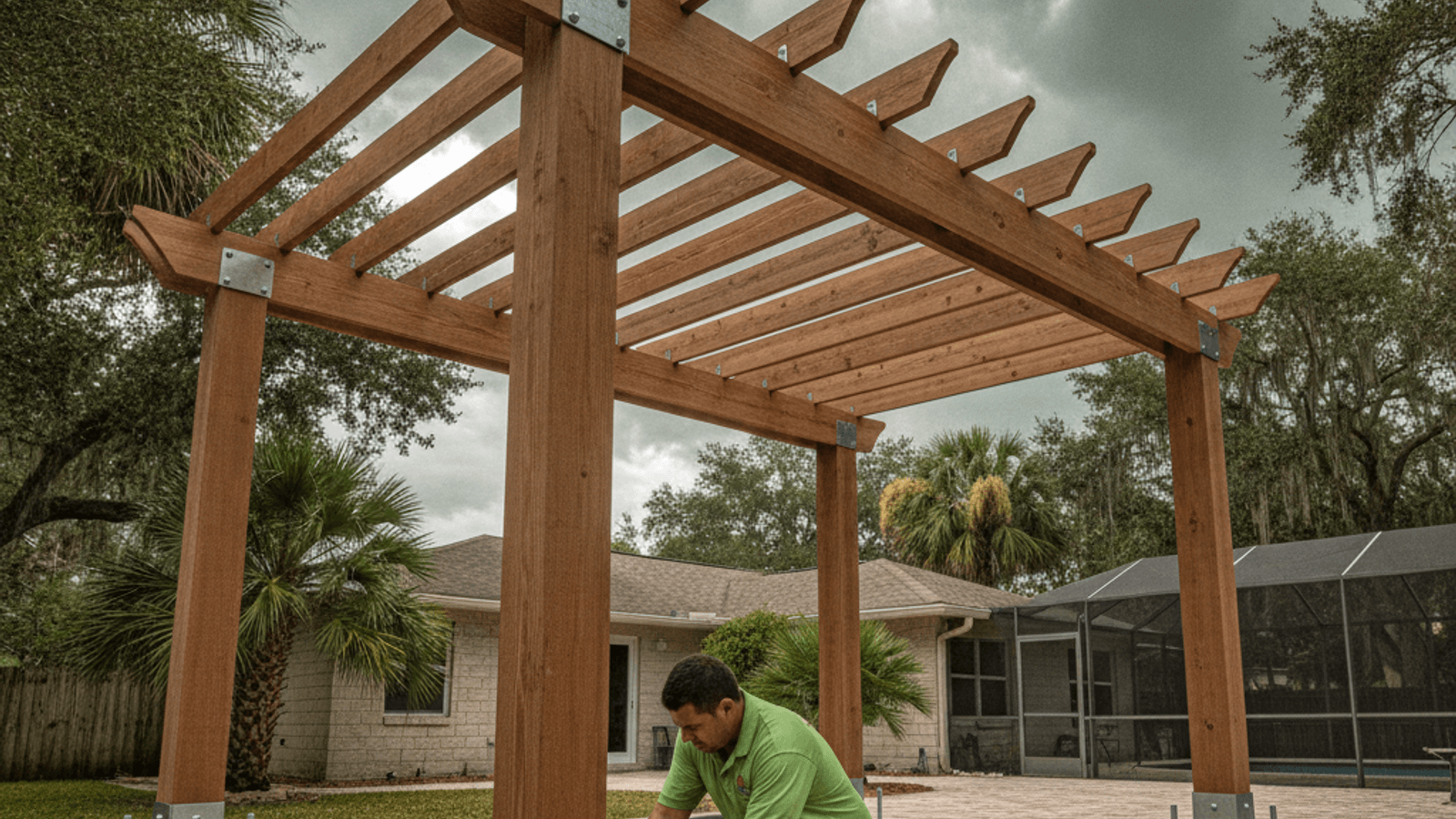
Central Florida is inland, so a lot of homeowners here assume hurricane season is mostly a coastal problem: storm surge, flooding, the kind of damage you see on the news from the Gulf coast. Wind is a different story. Orange, Seminole, and Osceola counties still see real sustained wind and gusts from tropical systems every June through November, and an outdoor structure that isn’t properly anchored doesn’t need a direct hit to get damaged. It just needs one strong afternoon.
Wind, not surge, is the Central Florida risk
Storm surge and coastal flooding aren’t a Greater Orlando concern the way they are for homes near the coast. What is a concern here is straight-line wind and tropical-storm-force gusts, which can hit inland Central Florida even from a system that’s weakened significantly by the time it crosses over from either coast. An open pergola, a gazebo roof, or a lightly anchored gazebo or pavilion structure catches wind the way a sail does, and that’s exactly the kind of structure that fails first when a named storm moves through.
What actually fails in a storm
The most common hurricane-season damage isn’t a structure blowing over dramatically. It’s a post pulling partially loose from an undersized or aging footing, a roof panel or lattice section lifting at a corner where a fastener has corroded or loosened over time, or a screen panel on a screened lanai tearing loose from its spline groove under sustained wind pressure. Each of those starts small and gets worse fast once wind gets underneath it.
Checking your pergola or gazebo before the season starts
Walk your pergola or gazebo or pavilion structure and check the post base connections where the post meets the footing. Look for visible rust on any exposed hardware, cracking in the concrete around the base, or any wobble when you put your weight against the post. A post that shifts noticeably when pushed by hand is a structure that needs attention before storm season, not after.
Check the roof structure too, whether it’s an open lattice, solid panel, or fabric shade cover. Loose lattice boards, cracked or warped panels, and any fastener that’s backed out or corroded are all points where wind can get a grip and start peeling the structure apart. Fabric shade covers and canopy attachments should generally come down entirely ahead of a forecast storm, since fabric catches wind more aggressively than a rigid structure and is far easier to remove and store than to replace.
Inspecting your screened lanai or pool cage
A screened lanai enclosure takes wind pressure across a much larger surface area than an open pergola, which is exactly why Florida Building Code holds pool cage and lanai structures to specific wind-load engineering standards in the first place. Before hurricane season, check screen panels for existing tears or loose spline, since a small tear under wind pressure can widen fast and take the whole panel with it. Check the aluminum frame at each corner and roof connection point for looseness, corrosion, or any section that’s visibly bowed or bent from a prior storm season that never got addressed.
If your lanai is older or you’re not sure when it was last inspected structurally, having an experienced local crew check the frame and anchoring before the season starts is worth it, since a failure here during an actual storm risks damage well beyond the enclosure itself.
What to actually do when a storm is forecast
Once a specific storm is being tracked toward Central Florida, take down anything that isn’t structurally anchored: patio umbrellas, string lights, fabric shade sails, freestanding decor, and any furniture that isn’t heavy enough to stay put in sustained wind. Secure or store cushions and lightweight furniture rather than leaving them to become projectiles. For a pergola or gazebo you’ve already confirmed is properly anchored, there’s usually not much more to do beyond clearing loose items from around and on top of it.
After the storm passes
Walk your outdoor structures again after any named storm that brought sustained wind through your area, even if nothing looks obviously damaged. Check post bases again for new movement, inspect screen panels for tears that weren’t there before, and look over roof panels and lattice for anything that shifted. Catching a small issue right after a storm, rather than waiting until the next one, is what keeps minor wind damage from becoming a full rebuild.
Anchoring standards matter more than most homeowners realize
Florida Building Code wind-load requirements exist specifically because Central Florida structures need to survive real tropical-system wind, and a properly permitted, engineered pergola or lanai anchored to code holds up dramatically better than a structure built without a permit or proper engineering behind it. If you’re planning a new pergola, gazebo, or lanai ahead of hurricane season, that’s the detail worth confirming with your contractor before construction starts, not after a storm tests it for you.
Documenting your structures before the season starts
Take dated photos of your pergola, gazebo, and lanai structures before hurricane season each year, close-up shots of post bases, roof connections, and screen panels included. If a storm does cause damage, having a clear before picture makes the insurance claims process considerably smoother, since it removes any ambiguity about what condition the structure was in before the storm versus what changed after it. This takes fifteen minutes and is easy to forget until the week a storm is already being tracked toward the state, which is exactly why doing it early in the season, before there’s an active system to worry about, is worth building into a yearly routine.
Timing repairs and upgrades before peak season
If your pre-season walkthrough turns up an issue, loose hardware, a small screen tear, or a post base that needs attention, scheduling that repair in late spring rather than waiting gives a local crew time to get to it before demand picks up heading into the June through November window. Contractors experienced with Central Florida’s storm season tend to see a rush of inspection and repair calls the moment a storm is actually being tracked toward the state, and getting ahead of that rush by even a few weeks generally means faster scheduling and a calmer, less rushed repair.
Homeowners in newer communities aren’t automatically covered
It’s a common assumption that a newer home in a community like Lake Nona or Celebration means the outdoor structures were automatically built to current wind standards. That’s usually true for the home itself, but aftermarket additions like a pergola, gazebo, or screened lanai added by a previous owner or a lower-cost installer aren’t guaranteed to meet the same standard, which is exactly why an inspection before your first hurricane season in a new home is worth the time.
Does Central Florida need hurricane prep if it’s not on the coast?
Yes. Inland Central Florida doesn’t face storm surge, but it does see real sustained wind and gusts from tropical systems every hurricane season, which puts pergolas, gazebos, and screened lanais at genuine risk if they’re not properly anchored.
How do I know if my pergola is anchored well enough for storm season?
Check the post base connections for wobble, rust, or cracking concrete, and check the roof structure for loose fasteners or panels. A post that shifts when pushed by hand or visible corrosion on hardware are signs it needs attention before the season starts.
Should I take down my screened lanai before a hurricane?
No, a properly built and maintained screened lanai is designed to stay up through storm-season wind. What matters is inspecting screen panels and frame connections beforehand and repairing any existing tears, looseness, or corrosion before a storm tests them.
What should I remove from my backyard before a forecast storm?
Take down anything not structurally anchored: umbrellas, string lights, fabric shade sails, and lightweight or freestanding furniture and decor. A properly anchored pergola or lanai generally doesn’t need to come down itself.
Not sure whether your pergola, gazebo, or lanai is actually anchored to hold up this hurricane season? Call (407) 000-0000 and we’ll connect you with an experienced, insured local crew that can inspect it before the next storm, not after.